WhatsApp Automation for Chennai Businesses: What to Automate (and What NOT To)
WhatsApp automation can transform your Chennai business — but only if you automate the right things. This guide tells you exactly what to automate, what to avoid, and how to set it up correctly in 2026.
Revenue Mastery Consulting
AI Marketing Experts
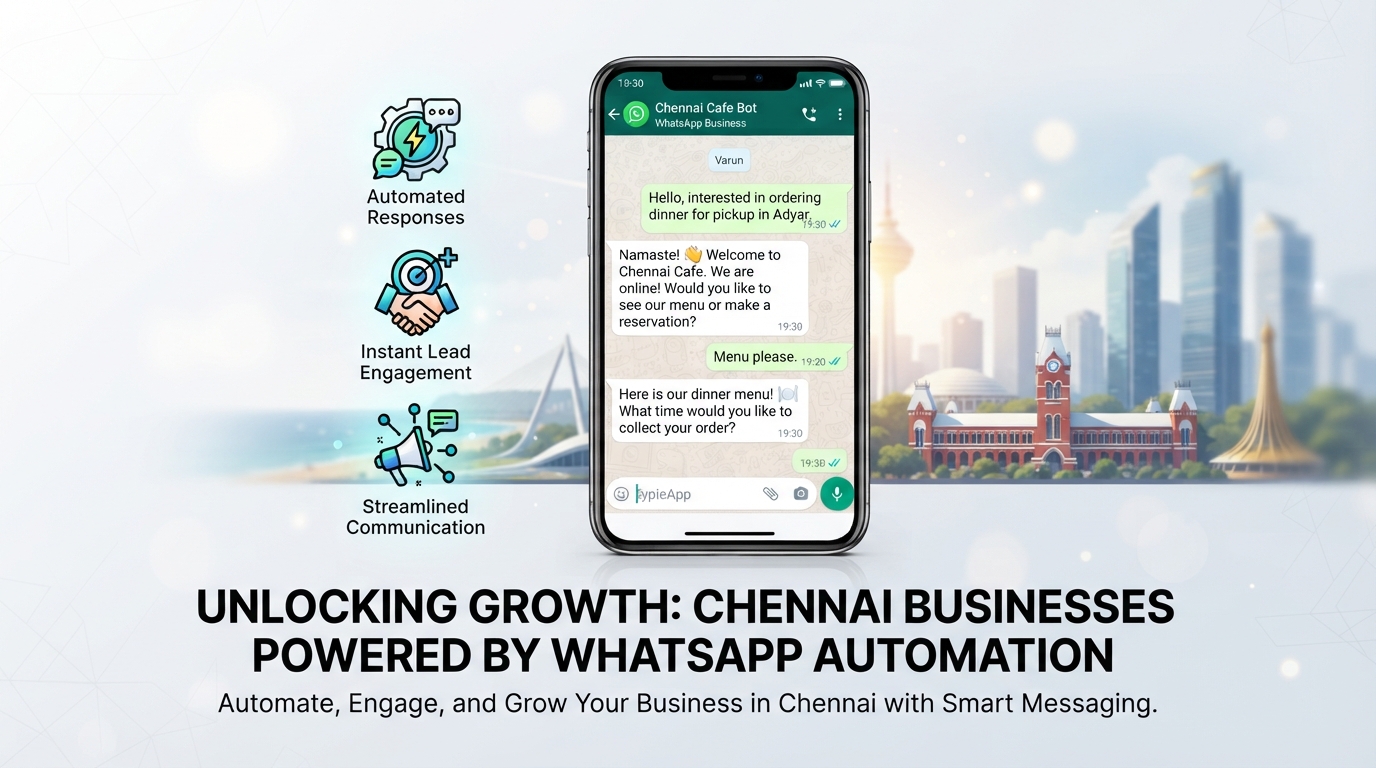
WhatsApp automation for Chennai businesses is one of the most powerful — and most misunderstood — tools available to Tamil Nadu SMEs in 2026. Done correctly, it responds to every enquiry in under 60 seconds at any hour, qualifies leads without a salesperson present, runs nurture sequences that keep your business visible for weeks, and dramatically improves your conversion rate from the same ad spend. Done incorrectly, it feels robotic, damages your brand reputation, and trains customers to ignore your messages entirely.
This guide draws a clear line between what to automate, what must stay human, and how to build a WhatsApp automation system that builds trust and converts leads for your Chennai business.
Why WhatsApp Automation Is Non-Negotiable for Chennai Businesses in 2026
Before getting into what to automate, it is worth establishing why WhatsApp deserves your automation investment above all other channels.
India has the highest number of WhatsApp users, with over 500 million active users. WhatsApp Business messages achieve open rates of 95–98%, compared to just 20–25% for email.
In Tamil Nadu, WhatsApp is not just a messaging app — it is the primary channel for business communication between customers and local businesses across retail, healthcare, real estate, education, automotive, hospitality, and services.
Chennai is one of India's fastest-growing tier-1 business cities, with a population exceeding 11 million and one of the highest smartphone penetration rates in South India — Chennai's consumer base is digital-first, mobile-first, and messaging-first.
WhatsApp-driven engagement results in a 27% sales increase for many businesses. WhatsApp business features improve conversion rates by around 20%.
The question is no longer whether to use WhatsApp for your Chennai business. The question is how to use it without losing the personal, trust-based quality that makes it effective.
The Two Tiers of WhatsApp for Business: App vs API
Before deciding what to automate, you need to understand which version of WhatsApp your business is operating on.
| Feature | WhatsApp Business App (Free) | WhatsApp Business API |
|---|---|---|
| Automation capability | Very limited — only quick replies and away messages | Full — chatbot flows, sequences, CRM integration |
| Number of simultaneous users | Single device only | Multiple agents and teams |
| Broadcast messaging | Limited to 256 contacts who saved your number | Unlimited with proper opt-in |
| CRM integration | Not available | Full integration |
| Facebook Ad connection (Click-to-WhatsApp) | Limited | Full |
| Best for | Fewer than 30–40 leads per month | Any business serious about lead conversion |
The outcomes businesses see reflect what consistently happens when they move from the WhatsApp Business App to the WhatsApp Business API, where the device limit disappears, broadcasting becomes unlimited, and automation handles the heavy lifting.
WhatsApp Business adoption delivers response times that are 225% faster for brands.
If you are running paid ads on Facebook or Google and generating more than 30 leads per month, the WhatsApp Business API is the infrastructure that makes meaningful automation possible. The pricing changes from January 1, 2026 also mean Indian businesses now pay one of the cheapest WhatsApp messaging rates in the world — making the ROI case even stronger.
What to Automate: The 7 High-ROI Flows for Chennai Businesses
1. Instant Lead Response (Within 60 Seconds)
What it is: When a prospect submits a Facebook lead form, clicks a Click-to-WhatsApp ad, or messages your website's WhatsApp button, an automated personalised greeting fires immediately.
Why automate it: Leads contacted within 5 minutes are 21 times more likely to qualify than those contacted after 30 minutes. An automated instant response ensures you are always in that first-five-minute window — regardless of the time the lead arrives.
What it should say: Not a generic "Thank you for contacting us." It must be specific to the product or service the lead enquired about, use their name, and include one clear next step.
Example for a Chennai real estate developer:
"Hi [Name]! Thanks for your interest in our OMR project. Quick question — are you looking for a 2BHK or 3BHK? I'll send you the price sheet and floor plans right away."
Chennai's real estate market from OMR to ECR to Ambattur generates high volumes of enquiries from portals, ads, and referrals. WhatsApp automation ensures every lead is followed up within 60 seconds and nurtured through a sequence that keeps them engaged through the long property decision cycle.
2. Lead Qualification Sequence
What it is: A short series of automated messages or quick-reply buttons that gather key information about intent, budget, timeline, and requirements before any human is involved.
Why automate it: WhatsApp chatbots generate up to 5X more leads than traditional marketing channels, and WhatsApp chatbot campaigns achieve an average lead conversion rate of 28%. Your sales team's time is finite. An automated qualification flow filters serious buyers from casual browsers so your team only invests energy where it counts.
What to collect in your qualification flow:
- What they are looking for (product type, service category)
- Location or area preference (critical for real estate — Velachery, OMR, Anna Nagar, Porur)
- Budget range (where relevant to your business)
- Timeline ("Are you making a decision in the next 1–4 weeks or still exploring?")
- Contact preference (WhatsApp conversation, phone call, or in-person visit)
3. Follow-Up Sequences for Non-Responsive Leads
What it is: An automated series of messages sent over 7–21 days to leads who did not respond to your initial outreach.
Why automate it: The majority of leads who do not reply immediately are not disinterested — they are busy, distracted, or not quite ready. 70% of companies using chatbots on WhatsApp report higher customer satisfaction, and response times have dropped by up to 35% with automation.
A proven 7-day sequence structure for Chennai businesses:
| Day | Message Type | Purpose |
|---|---|---|
| Day 0 — Instant | Initial response + qualification question | Capture peak interest |
| Day 1 | Value content — brochure, course overview, or helpful tip | Educate and build trust |
| Day 3 | Social proof — client testimonial, before/after, or Google review | Remove doubt |
| Day 7 | Soft urgency trigger — limited availability, an upcoming offer, a deadline | Prompt action |
| Day 14 | Check-in — personal tone, open-ended | Reopen the conversation |
4. Appointment Confirmation and Reminder Automation
What it is: Automated WhatsApp messages sent after a booking is made (confirmation) and again 24 hours and 2 hours before the appointment (reminders).
Why automate it: From dental clinics in Nungambakkam to physiotherapy centres in Adyar, healthcare businesses use WhatsApp for appointment confirmations, reminders, prescription updates, and follow-up care messages. WhatsApp's near-100% open rate means no-show rates drop significantly when automated reminders are in place.
This applies equally to real estate site visits, coaching centre demo classes, home service consultations, and any service business where missed appointments cost real money.
5. Post-Sale Follow-Up and Review Requests
What it is: An automated sequence triggered after a customer completes a purchase or service, asking for feedback, a Google review, or a referral.
Why automate it: WhatsApp-first brands report a 68% repeat purchase rate, thanks to continuous engagement. The customers you have already won are your lowest-cost source of new revenue — through repeat business and referrals. Automating post-sale follow-up means this never slips through the cracks.
Suggested post-sale flow:
- Day 1 after service: "How was your experience? We'd love to know!"
- Day 3: Review request with a direct Google Maps link
- Day 30: Check-in with a related offer, seasonal update, or referral ask
6. Broadcast Campaigns to Opted-In Contacts
What it is: Sending relevant, value-driven promotional messages to your existing opted-in customer list.
Why automate it: Retail businesses in Chennai can use WhatsApp to broadcast new arrivals, festive offers, and flash sales to opted-in customers with 98% open rates, reaching their entire list before a competitor's Instagram post is seen by 10% of their followers.
The critical requirement: every contact must have explicitly opted in to receive your messages. 55% of consumers expect businesses to have automated responses on platforms like WhatsApp — but they also expect relevance. Irrelevant broadcasts lead to blocks and reputation damage.
Best practices for Chennai business broadcasts:
- Send during peak mobile hours: 7–10 PM IST on weekdays
- Segment your list by interest, product, or location (OMR buyers vs Anna Nagar buyers)
- Include a clear CTA in every message (reply, click, book, or call)
- Keep frequency to 2–4 messages per month for promotional content
7. Click-to-WhatsApp Ad Response Flows
What it is: When you run Click-to-WhatsApp ads on Facebook or Instagram, every lead lands directly in a WhatsApp conversation. An automated flow triggers immediately after the ad click to qualify and engage the lead.
Why automate it: Click-to-WhatsApp ads typically achieve 3–5x higher conversion rates compared to traditional click-to-website ads in the Indian market. Indian consumers prefer personal conversations over filling forms, making WhatsApp the perfect channel for engagement.
Click-to-WhatsApp ad spend grew 82% year-on-year globally between Q1 2025 and Q1 2026. Chennai businesses running these ads without an automated post-click flow are wasting the most valuable moment in the entire customer journey — the instant after a prospect shows interest.
The ideal Click-to-WhatsApp flow for a Chennai business:
- Ad click triggers → automated greeting fires in under 10 seconds
- Pre-filled message identifies which ad and campaign drove the conversation
- Qualification questions collect intent, area preference, and budget
- Brochure, price sheet, or relevant resource is automatically sent
- Sales team receives hot lead notification with full conversation context
What NOT to Automate: The 5 Boundaries Every Chennai Business Must Respect
1. Do Not Automate Price Negotiations
When a customer says "Can you give me a better price?", an automated response feels dismissive and disrespectful. Price conversations require human judgment, relationship context, and trust. Route these to your sales team immediately.
2. Do Not Automate Complaints and Escalations
A frustrated customer who receives a templated response to a complaint will escalate. When someone expresses dissatisfaction, anger, or frustration, your system should detect that signal and route the conversation to a human within minutes — not continue the automated sequence.
3. Do Not Automate Personalised Sales Closings
The final conversation before a major purchase decision — a property, an expensive service, a premium product — must be human. Automation's job is to warm the lead, gather information, and set up that closing conversation. It should never attempt to close a high-value sale on its own.
4. Do Not Automate Without Proper Opt-In
WhatsApp API adoption is expected to reach 85% of large enterprises by 2026. As adoption grows, so does scrutiny. Messaging contacts who have not opted in to receive your WhatsApp messages violates Meta's policy, risks your account being permanently banned, and erodes customer trust. Every contact in your automated sequences must have explicitly consented.
5. Do Not Let Automation Run Indefinitely Without Human Review
Review your automation flows every 60–90 days. Messages that felt fresh in January feel stale by June. Offers expire. Market conditions change. Customer language evolves. Flows that are not maintained become liabilities.
The Right Architecture: How Automation and Human Interaction Work Together
The best WhatsApp strategy for a Chennai business in 2026 is not fully automated and not fully manual. It is a structured handoff system.
- Lead Arrives
- ↓
- AI/Automation: Instant response + qualification (0–60 seconds)
- ↓
- AI/Automation: Multi-day nurture sequence (Days 1–21)
- ↓
- Engagement Signal Detected (reply, link click, download)
- ↓
- Human Team: Notified with full context — takes over conversation
- ↓
- Closing Conversation: Fully human
- ↓
- Post-Sale: Automation resumes (review request, follow-up, upsell)
By 2026, 2.5 billion hours of business time will be saved using WhatsApp chatbots. Industries like retail, banking, and healthcare are projected to save $11 billion through chatbot automation. The businesses capturing this value are those that automate the right parts of the process and protect the human parts that build trust.
How RevMax AI Implements WhatsApp Automation for Chennai Businesses
Revenue Mastery Consulting has built RevMax AI specifically for Tamil Nadu and Indian SMEs who want professional WhatsApp automation without the complexity of managing it internally.
RevMax AI handles:
- Instant automated response to every inbound lead within 60 seconds
- Intelligent qualification through natural conversational flows
- Multi-day nurture sequences tailored to your product and industry
- Automated appointment reminders and post-sale follow-up
- Hot lead notifications to your sales team with full conversation context
- Native CRM integration so every WhatsApp interaction is tracked and attributed
WhatsApp automation reduces customer support costs by around 30% — and when paired with RevMax AI's lead conversion layer, the revenue impact is substantially larger.
Frequently Asked Questions
Q: Is WhatsApp automation legal for businesses in India in 2026?
Yes, when using the official WhatsApp Business API through a verified Business Solution Provider, with documented opt-in from all recipients. Bulk messaging through unofficial tools violates Meta's policy and risks permanent account suspension.
Q: How much does WhatsApp Business API cost for a Chennai small business?
Effective January 1, 2026, WhatsApp shifted from per-conversation to per-message pricing. Indian businesses pay ₹1.09 per marketing template, ₹0.145 per utility template, and ₹0.145 per authentication template. Service messages within the 24-hour customer service window remain completely free.
Q: Can WhatsApp automation really replace my sales team's follow-up calls?
No — and it should not try to. Automation handles the speed and consistency that humans cannot sustain at scale. Your sales team handles the relationship conversations that close deals. The two work together, not in replacement of each other.
Q: How long does it take to set up WhatsApp automation for my Chennai business?
With RevMax AI, a basic automation system — instant response, qualification flow, and 7-day nurture sequence — can be set up and live within 3–5 business days.
Q: What industries in Chennai benefit most from WhatsApp automation?
Real estate, education and coaching, healthcare and clinics, home services, retail, financial services, and any business where lead response speed and consistent follow-up determine whether the deal is won or lost.
Next Steps
If your Chennai business is generating leads but losing them to slow follow-up, WhatsApp automation is the single highest-ROI system you can implement in 2026.
Book a free WhatsApp automation consultation with Revenue Mastery Consulting →
Related Articles
Chennai Business in AI Search Recommendations: 7-Point Test
Is your Chennai business named when people ask AI for recommendations? Run this 7-point test, and learn what you can and can't control.
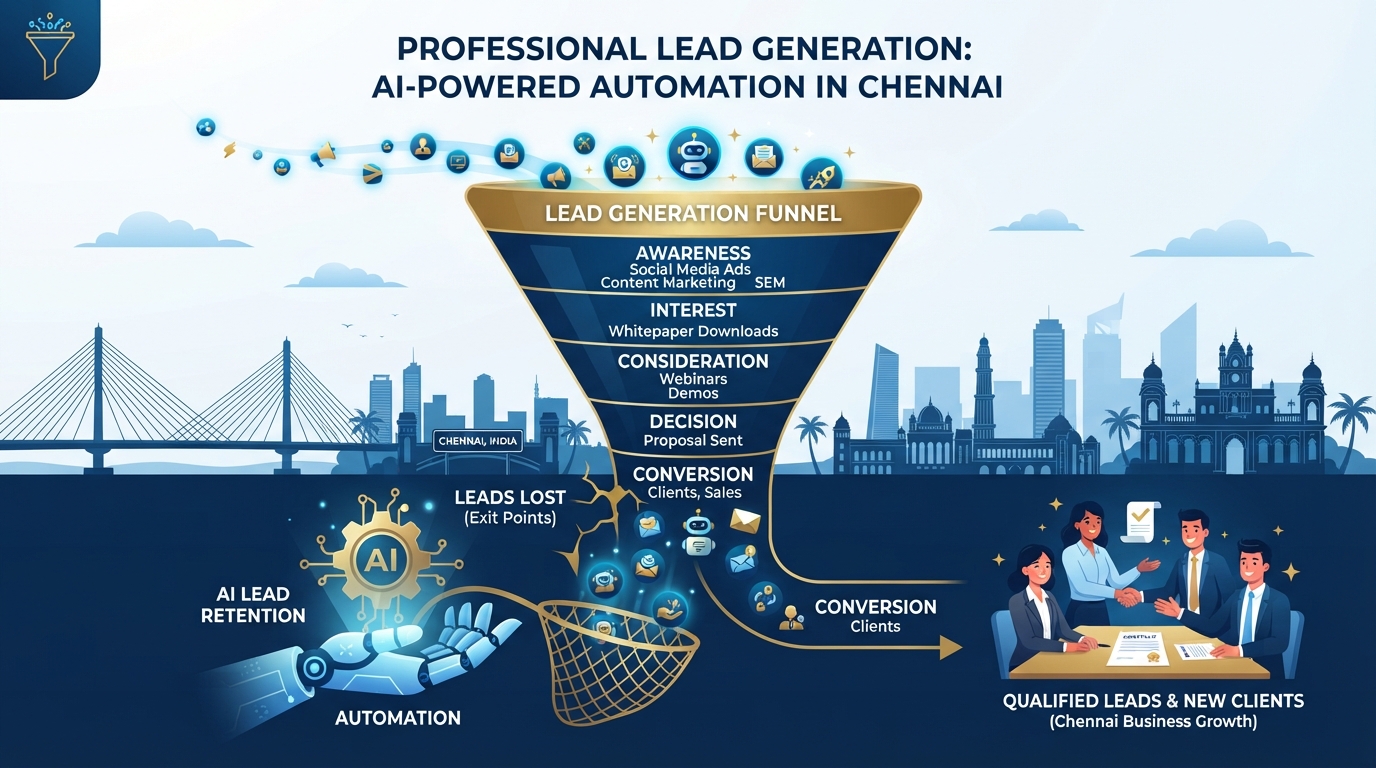
How a 5-Person Chennai Business Can Automate Follow-Up Like a 50-Person Team
Can a 5-person Chennai business follow up like a 50-person team without hiring? Yes — this guide shows exactly how automation closes the capacity gap.
AI Automation for Coaching Centres in Chennai: Convert More Enquiries Into Admissions
Chennai coaching institutes are losing 40–60% of admissions enquiries to slow follow-up and overwhelmed admissions teams. Learn how AI automation helps NEET, JEE, UPSC, and skill coaching centres respond instantly, nurture every lead, and fill batches — automatically.