CRM for Real Estate Business in India: Do You Actually Need One?

If you're a real estate developer, broker, or property consultant running your business on WhatsApp chats and a shared Google Sheet, you probably already know at some level that the system is breaking. The question isn't whether a CRM would help you — the question is: when does your business reach the point where not having one is actively costing you money? A CRM for a real estate business is a system that tracks every lead, follow-up, and site visit in one place — replacing scattered spreadsheets and WhatsApp group messages with a single source of truth for your entire sales pipeline.
The answer to "do I need one?" is almost always yes. The more useful question is: how much is your current system costing you, and what would having the right one change?
Signs Your Real Estate Business Has Outgrown Spreadsheets and WhatsApp Groups
These are the five most reliable indicators that your current lead management system is failing you:
- 1. You regularly discover enquiries that were never followed up on.
Someone finds a lead in an old WhatsApp thread from three weeks ago. They call. The person already bought a property from a competitor. This scenario is not occasional — it's happening multiple times per month if you have no systematic tracking. - 2. You can't tell which marketing channel is producing your best leads.
When someone from management asks "are our Google Ads performing?" the honest answer is "we're not sure — we can see how many form submissions we got, but we don't know how many became site visits or sales." This is data blindness that costs real money. - 3. Your follow-up consistency depends entirely on which salesperson is handling the lead.
Some team members follow up diligently. Others forget. With no system holding everyone to the same standard, your conversion rate is a function of individual personality rather than process. - 4. Your team spends significant time every day just figuring out who needs to be called today.
This is "status update" time — asking colleagues where a lead is, checking old messages, trying to remember what was discussed in the last call. A CRM eliminates this entirely by showing every team member exactly what their pipeline looks like in real time. - 5. You've lost a significant deal because a lead "slipped through the cracks."
This is the most obvious sign. If you can think of even one significant property deal you lost in the last six months because nobody followed up at the right time — that's the cost of not having a CRM.
According to a 2024 NASSCOM survey cited by industry sources, 62% of Indian SMB sales teams still rely on spreadsheets or manual methods for lead tracking — directly correlating with lower conversion rates. Indian SMBs are generating leads from an average of 4–6 channels simultaneously (Google Ads, Facebook, IndiaMart, JustDial, WhatsApp, and organic search), making manual tracking practically impossible at scale.

What a CRM Actually Does (Beyond Just "Storing Contacts")
Most people think of a CRM as a fancy address book. It isn't. A properly configured CRM for a real estate business:
- Captures every lead automatically from all your sources — website forms, Meta Ads lead gen forms, Google Ads, inbound WhatsApp, JustDial — and stores them in one place with full source attribution.
- Assigns leads to team members automatically based on rules you define (by project, by location, by agent availability, by lead score).
- Tracks every interaction — calls, messages, meetings, site visits — linked to the specific lead record. Anyone on the team can see the complete history in 10 seconds.
- Triggers automated follow-ups at the right time — a WhatsApp message three days after a site visit, a call reminder seven days after the last conversation, a re-engagement message for leads that have gone cold.
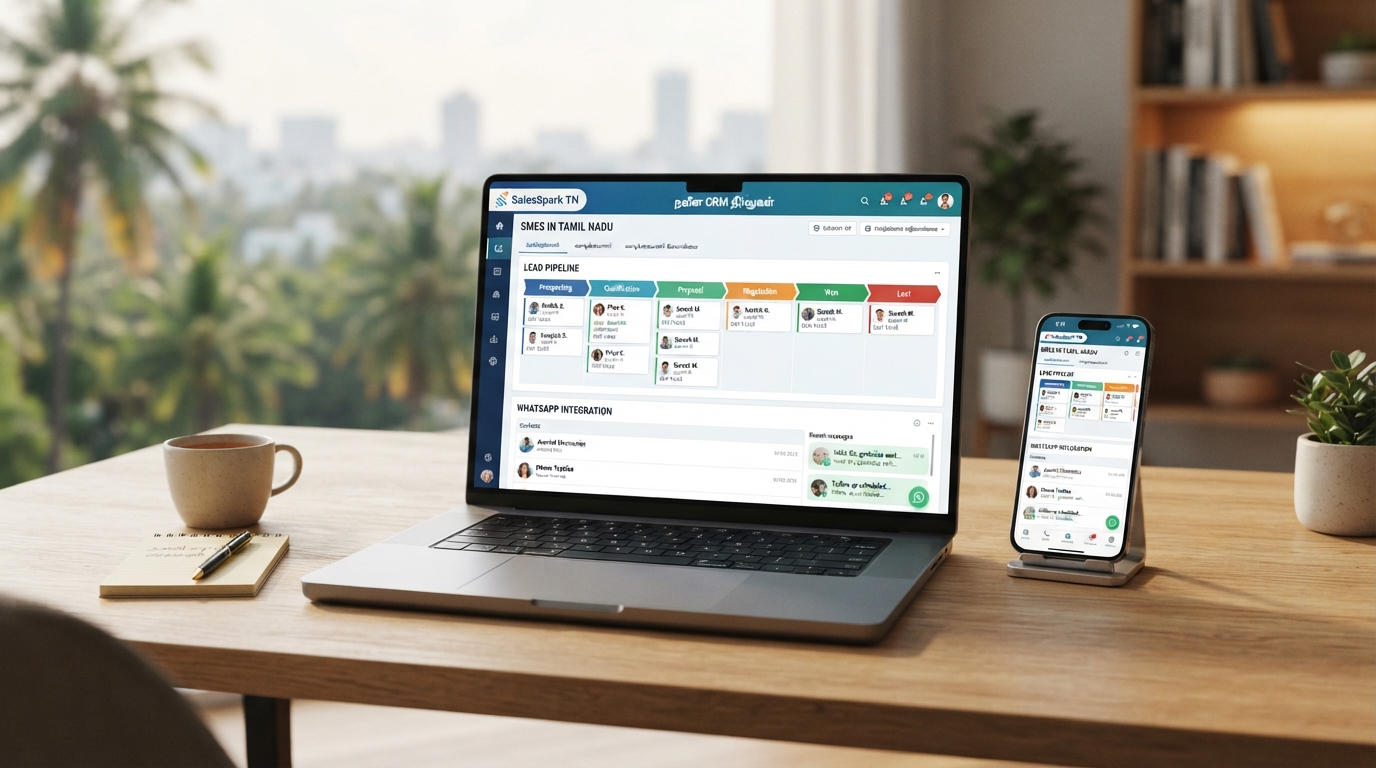
- Shows you your pipeline in real time — how many leads are at each stage, how long they've been there, which ones are overdue for follow-up, and which team members are carrying the highest or lowest load.
- Reports conversion rates by source, project, and agent — so you can make intelligent decisions about where to invest marketing budget and how to coach underperforming team members.
This is the difference between running your sales operation on intuition and running it on data.
CRM vs. Just Hiring More Sales Staff: Which Solves the Real Problem?
This is a question real estate business owners in India face constantly: "Should I hire another salesperson or invest in better systems?"
The honest answer depends on where your pipeline is breaking.
If you genuinely don't have enough people to handle the current volume of enquiries during peak hours, a new hire helps. But if your issue is that leads are falling through the gaps, follow-ups are inconsistent, and your team is spending half their time on status updates rather than sales conversations — hiring another person into a broken system just creates a bigger broken system.
Salesforce's State of Sales research consistently shows that businesses using CRM systems report a 29% increase in sales revenue on average — not from generating more leads, but from converting more of the leads they already have. And according to CRM statistics compiled by Wave Connect, 70% of real estate professionals worldwide now use CRM to manage sales funnels — suggesting the industry has largely concluded that systematic lead management is non-negotiable at any meaningful scale.
What to Look for in a CRM for Indian Real Estate Specifically
Not all CRMs are built for Indian real estate. Many enterprise platforms are designed for Western B2B sales cycles — with integrations for LinkedIn, Salesforce-native apps, and email-centric workflows that don't match how Indian real estate operates. Here's what matters in the Indian context:
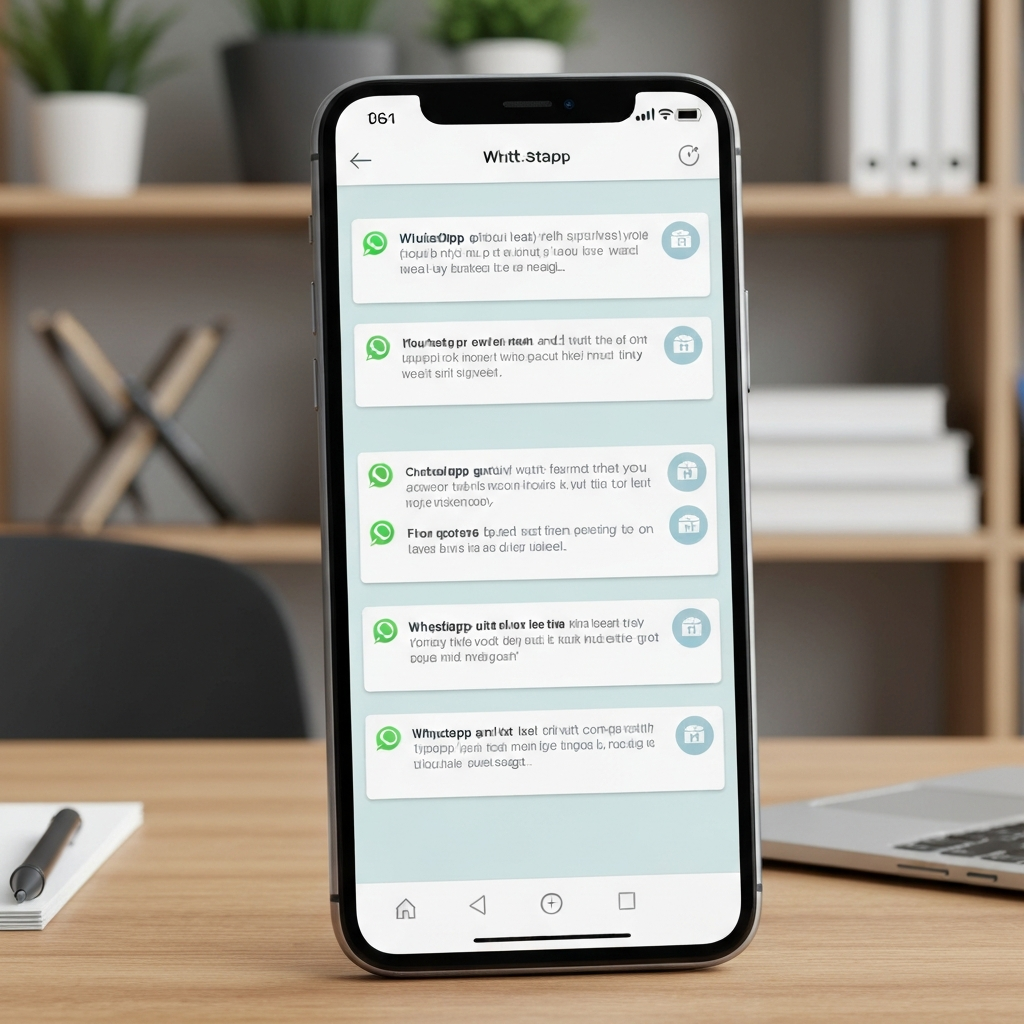
- WhatsApp integration (not optional). Your leads expect to be reached on WhatsApp. A CRM that doesn't integrate with WhatsApp Business — whether for automated messages, template broadcasts, or click-to-WhatsApp logging — is fundamentally misaligned with Indian consumer behaviour.
- Multi-source lead capture. Your leads come from Google Ads, Meta Ads, JustDial, 99acres, MagicBricks, organic, and referral. Your CRM should capture all of them and tag the source automatically.
- Mobile-first. Your sales team is on-site, on the road, and in buyers' homes. The CRM must be fully functional on mobile without constant desktop access.
- Local language support. For Tamil Nadu-based businesses, the ability to send messages and notes in Tamil is a practical requirement for teams where some members are more comfortable in Tamil.
- INR-denominated pricing. This sounds obvious, but it's not universal. Many international CRM platforms have opaque pricing in USD with conversion charges that make them significantly more expensive than advertised for Indian businesses.
- Pipeline stages that match Indian real estate. A pipeline for Indian residential real estate looks different from international models: it typically includes stages like Enquiry → Site Visit Scheduled → Site Visit Completed → Negotiation → Booking → Documentation → Registration. Your CRM should support custom pipeline stages that match your actual process.
Common Objections (Cost, Complexity, "My Team Won't Use It") — Addressed
"It's too expensive."
Modern CRM platforms for Indian SMBs range from ₹500 to ₹3,000 per user per month — a fraction of what you're spending on ads. If a CRM recovers even one mid-ticket property deal per quarter that would have otherwise been lost to poor follow-up, it has already paid for itself many times over.
"It's too complex to set up."
Cloud-based CRM platforms today can be configured for basic real estate use in a few days, not months. You don't need an IT department. You need a committed 3-hour setup session and a willingness to train your team on the workflow.
"My team won't use it."
This is the most legitimate concern — and the most important one to address. CRM adoption fails when the system creates more work than it eliminates. The fix is choosing a platform that genuinely simplifies your team's workflow rather than adding reporting overhead. If the CRM shows every team member exactly what they need to do today — and makes logging a call easier than not logging it — adoption follows naturally.
How Branding and CRM Data Work Together to Close More Deals
Here's a connection that's rarely discussed: the data in your CRM is one of the most valuable branding inputs you have.
Your CRM tells you which project features come up most often in buyer conversations, which objections are most common, which localities are generating the highest conversion rates, and what language buyers use when they describe their ideal home. All of this is raw material for more precisely targeted ads, more resonant website copy, and more effective counsellor scripts.
The best real estate businesses in Chennai use their CRM not just for operational follow-up — but as a strategic brand insight tool that makes their marketing sharper every season.
For more on how to integrate lead management with marketing strategy, read our guide on getting more real estate leads in Chennai.
Frequently Asked Questions
Do small real estate businesses in India really need a CRM?
If you're handling more than 30–40 enquiries per month from any combination of digital and offline sources, a CRM is no longer optional — it's the difference between a business that scales and one that stalls at a certain revenue level. Below that volume, a well-structured spreadsheet with a strict daily update protocol can suffice temporarily.
Which CRM is best for real estate in India?
The best CRM for your real estate business depends on your team size, lead sources, and workflow. Key criteria for Indian real estate: WhatsApp integration, multi-source lead capture, mobile-first design, INR pricing, and customisable pipeline stages. RevMax App is purpose-built for SMBs in the Indian market with these requirements in mind.
How long does it take to see ROI from a CRM?
Most real estate businesses see measurable improvement in follow-up consistency and lead-to-visit conversion within the first 30–60 days of implementation. Full ROI — in terms of deals recovered that would otherwise have been lost — typically becomes visible within one full sales cycle (90–120 days).
Can a CRM help with property project launches specifically?
Yes — a CRM is particularly powerful for new project launches. You can segment your entire existing lead database by project interest, budget, and locality, then run a targeted WhatsApp or email broadcast to the most relevant segment on launch day. This often produces faster early bookings at lower marketing cost than broad-based advertising.
Ready to implement a CRM for your real estate business?
Stop losing deals to slow follow-up and scattered data. Revenue Mastery Consulting helps real estate businesses implement complete CRM and automation systems.