What's the Difference Between Workflow Automation and AI Automation?
By Avinash N.U., Founder & Chief Brand Strategist
•June 25, 2026
•8 min read
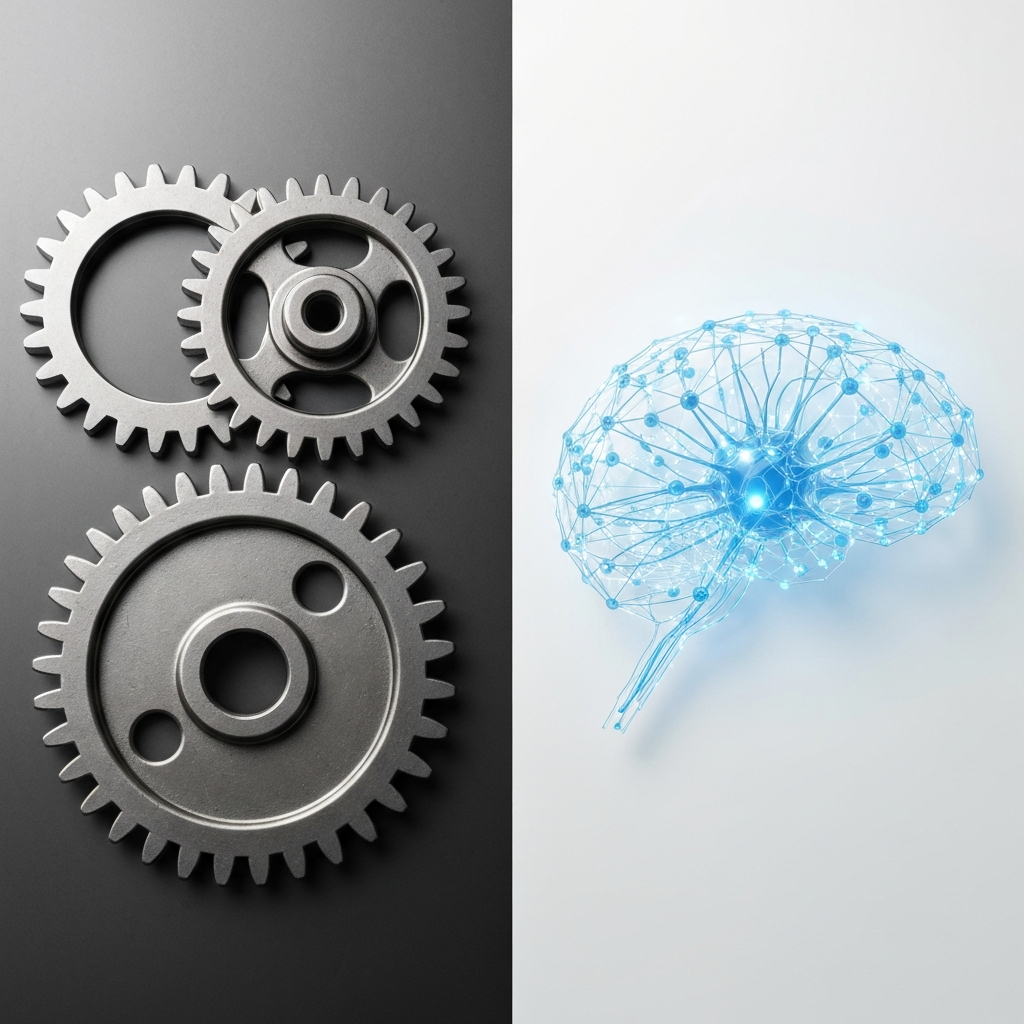
If you've been researching automation for your business and can't figure out the difference between workflow automation and AI automation, you're not alone — and the confusion is not your fault. The automation industry has spent years blurring these two very different concepts, and many businesses end up paying for the wrong solution as a result. This guide explains the real difference between workflow automation and AI automation in plain English, when you need each one, and what combination most small businesses actually require.
Why the Confusion Exists
The vendor landscape deserves a significant share of responsibility for the category confusion businesses are navigating. Starting around 2023 and accelerating through 2025, nearly every established workflow automation vendor rebranded with AI positioning, adding language model integrations, calling existing chatbot functionality "agents," and presenting updated conditional routing systems as intelligent automation platforms.
The result? Business owners are buying AI tools when they need basic workflow tools — and vice versa. Both mistakes waste money.
Here's how to tell them apart.
What Is Workflow Automation?
Plain-English Definition:
Workflow automation uses predefined rules to move tasks, data, or information from one step to the next — automatically. There is no intelligence involved. It simply follows instructions.
Workflow automation uses rule-based logic to handle structured, repetitive tasks. Think of it as following a predetermined checklist: if this happens, do that. No thinking required, no learning involved. Workflow automation tools move data between systems, fill out forms, route documents, send notifications, and trigger actions based on simple conditions.
Examples of Workflow Automation:
- When a contact form is submitted → add to CRM and send a confirmation email
- When an invoice is 7 days overdue → send a payment reminder
- When a deal moves to "Proposal Sent" → create a follow-up task for day 3
- When a new employee is hired → trigger onboarding checklist
Traditional automation uses predefined triggers, rules, and actions. A typical workflow says: when this happens, check this condition, then do that action. For example, when a form is submitted, add the response to a spreadsheet and notify a sales rep. When a payment succeeds, update the CRM. When a lead changes status, create a task. This works well because the logic is clear and repeatable.
The Limitation:
The limitation is rigidity. Workflow automation can't adapt when things don't match the script. If an invoice format changes slightly, or a lead doesn't fit neatly into one territory, or an exception arises, the automation often stalls.
What Is AI Automation?
Plain-English Definition:
AI automation uses machine learning and language models to understand context, make decisions, and handle tasks that involve variable inputs — tasks that previously required human judgment.
AI, in the context of business automation, goes beyond following rules. AI systems learn patterns from data, make intelligent decisions, and adapt based on new information. They handle unstructured inputs like emails, documents, images, and conversations, and they improve over time. AI-powered automation can recognize context, make predictions, and handle exceptions that a rule-based system would miss. Instead of asking "Does this match my predefined rule?" AI asks "What does this look like based on what I've learned?"
Examples of AI Automation:
- An AI receptionist that reads a caller's intent and responds conversationally — not from a phone tree
- An AI that reads incoming emails, understands the request, and routes them correctly
- An AI that qualifies leads based on conversation context, not just form fields
- An AI that generates a personalized follow-up message based on what a prospect said in a meeting
AI workflow automation uses AI to complete recurring work from a goal, not only from a fixed rule. The workflow can read unstructured information, reason over context, and create deliverables.
Workflow Automation vs. AI Automation: Side-by-Side Comparison
| Feature | Workflow Automation | AI Automation |
|---|---|---|
| How it works | Follows fixed rules (if X → do Y) | Understands context and makes decisions |
| Input type | Structured (forms, fields, events) | Unstructured (emails, calls, documents) |
| Flexibility | Rigid — breaks when inputs don't match | Adaptive — handles exceptions |
| Learning | Does not learn | Learns and improves over time |
| Best for | Predictable, repetitive, rule-based tasks | Variable, judgment-based, conversational tasks |
| Cost | $20–$200/month for most tools | $200–$2,000/month depending on volume |
| Examples | CRM updates, email triggers, notifications | AI chat, lead qualification, document processing |
Which One Does Your Business Actually Need?
Use this simple decision framework:
Use workflow automation when:
Use traditional automation for stable, rule-based tasks such as routing forms, syncing CRM fields, sending notifications, and moving data between apps.
Use AI automation when:
Use AI workflow automation for recurring knowledge work such as lead research, meeting prep, weekly reports, customer summaries, and document review.
An even simpler way to decide:
If your process is a fixed rule, automate it with traditional tools. If your process feels like something you repeatedly explain to a coworker, it is probably an AI workflow.
Most Businesses Need Both — And That's the Right Answer
Most businesses should think of automation and AI as complementary rather than competing options. Automation is often the better choice for stable, repeatable processes, while AI is more useful when the work involves dynamic inputs or human-like reasoning. In many cases, the strongest solution is a combination of both, with automation managing the workflow and AI improving the quality or flexibility of the output.
A practical hybrid example for a service business:
- Workflow automation detects a new lead form submission → creates a CRM contact → notifies the sales team
- AI automation sends a personalized, conversational SMS to the lead → reads their reply → qualifies their interest → books a call if they're ready
The workflow handles the structured routing. The AI handles the conversation. Together, they create a seamless experience that no manual process can match.
The Biggest Mistake Businesses Make With These Two Types
The strategic error most businesses commit is treating these as a spectrum rather than as separate design disciplines. They add AI capabilities on top of existing workflow infrastructure and expect the combination to behave intelligently. What they actually get is a workflow that sometimes generates text and occasionally stalls when the AI component returns an output that the workflow logic did not anticipate.
The solution: design your automation architecture intentionally. Know which type of tool is doing which job — and build them to work together cleanly.
The Emerging Category: AI-Powered Business Platforms
Today, the most effective business automation solutions combine both approaches on a single platform. RevMax AI, deployed through Revenue Mastery Consulting, brings together:
- Workflow automation for CRM updates, task creation, pipeline management, and triggered communication sequences
- AI automation for conversational lead follow-up, intelligent SMS responses, appointment booking, and missed call recovery
This means your business can respond to a new lead in seconds — intelligently, conversationally, and automatically — while the back-end workflow updates your CRM, notifies your team, and schedules the next action without any manual input.
FAQ: Workflow Automation vs. AI Automation
Q: Is RPA (Robotic Process Automation) the same as workflow automation?
A: They're closely related. RPA (Robotic Process Automation) mimics human clicks on screens. AI agents understand goals, make decisions, and adapt to changing conditions.
Q: Can workflow automation tools handle AI tasks?
A: Workflow automation was never built for ambiguity, and no amount of vendor marketing changes that underlying reality. If a task requires judgment, context, or unstructured input — standard workflow tools will fail or produce unreliable results.
Q: Is AI automation harder to implement than workflow automation?
A: It can be, but modern platforms significantly reduce the complexity. Done-for-you implementations through consultants like Revenue Mastery Consulting make AI automation accessible for businesses of any size without requiring technical expertise.
Q: Which type of automation should a small business start with?
A: Starting with a structured workflow (and adding AI to it) is often the more practical path. Get your rule-based automations running first for quick wins, then layer AI where you need intelligent, adaptive responses.
Not Sure Which Type Your Business Needs?
At Revenue Mastery Consulting, we assess your workflows and tell you exactly which processes need rules-based automation, which need AI, and how to connect them into a system that works end-to-end.
Book a free workflow assessment with Revenue Mastery Consulting — we'll map your processes and recommend the right automation approach for your exact situation.
Related Articles
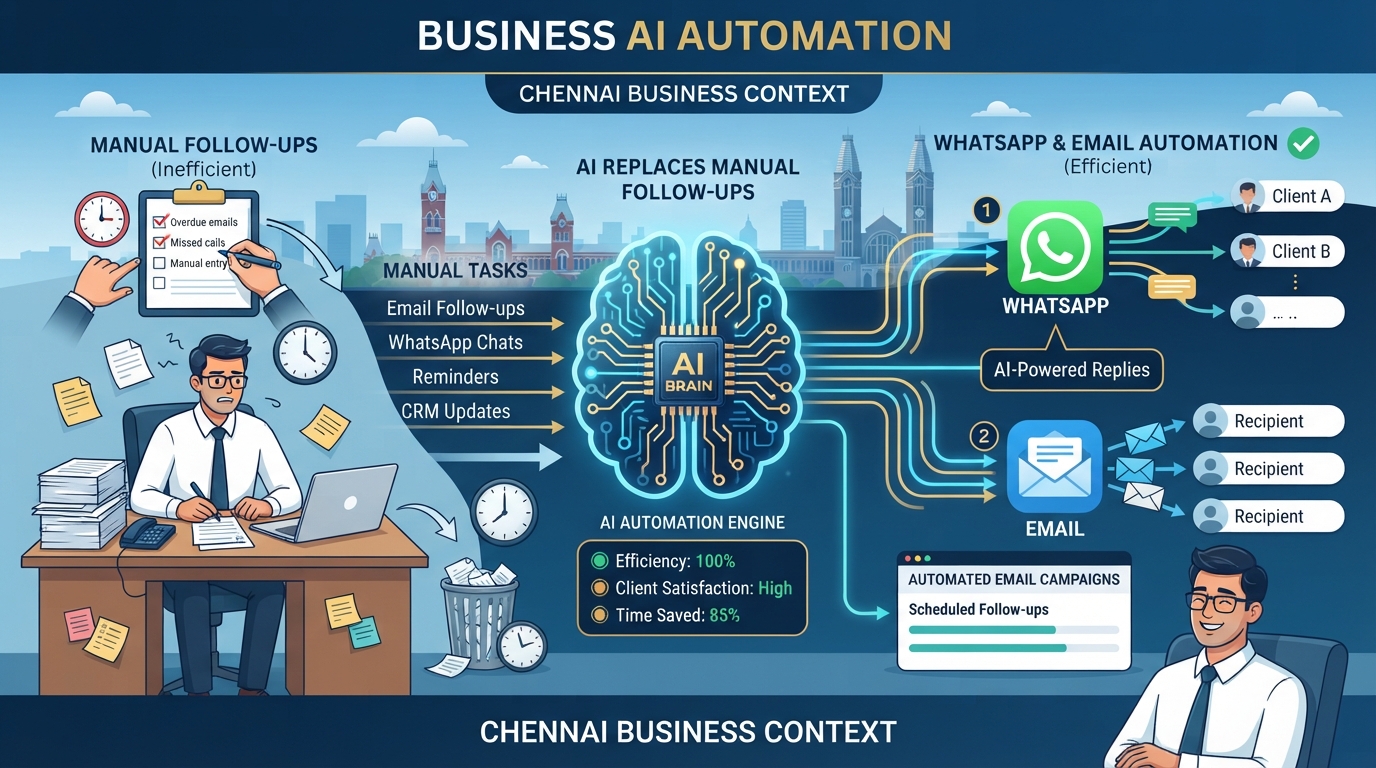
AI Automation for Small Businesses in Tamil Nadu: The 2026 Complete Guide
Discover how AI automation is transforming small businesses across Tamil Nadu — from Chennai to Coimbatore to Madurai. This complete 2026 guide covers what AI automation is, which industries benefit most, what results to expect, and how Revenue Mastery Consulting helps Tamil Nadu businesses automate lead follow-up and sales pipelines.
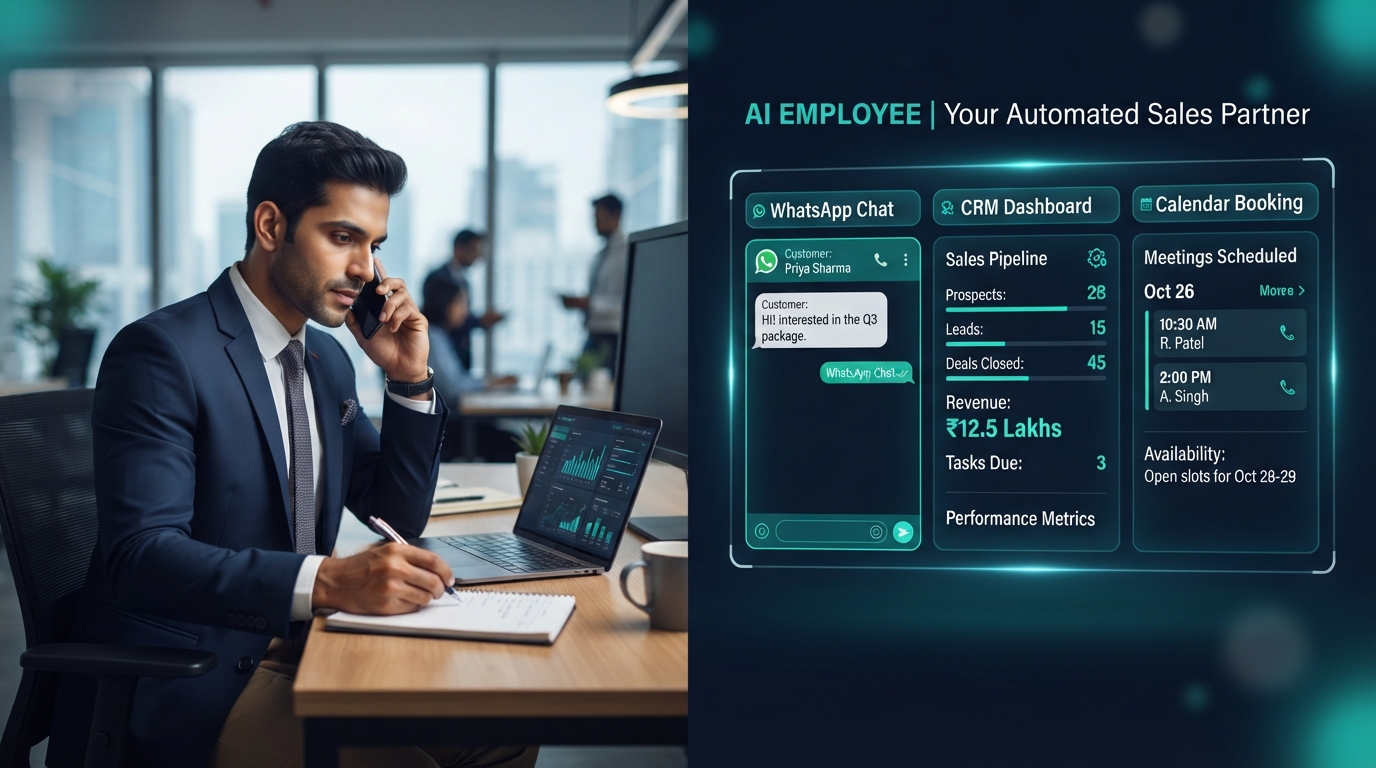
What Is an AI Employee? And Does Your Indian Business Actually Need One in 2026?
AI employees are the fastest-growing business tool in 2026 — but most Indian SMBs don't fully understand what they are, how they work, or whether they need one. This complete guide explains everything, with an honest look at what works and what doesn't.
Which Marketing Tasks Are Best Suited for AI Automation in a B2B Tech Role?
Not all marketing tasks should be automated. Here's exactly which B2B tech marketing tasks AI handles best — and how to prioritize them for real ROI.